NC Reentry 2030 Dashboard

It's time to unite around a bold goal: successful reintegration for EVERY person.
North Carolina's statewide initiative to dramatically improve
reentry success for people exiting prison and those under supervision.
Explore Reentry 2030
26 objectives. 133 strategies. 95 performance metrics. Track North Carolina's progress.
Executive Summary
Overview of Executive Order 303 and the Reentry Strategic Plan.
In Their Own Words
Hear from the people and communities impacted by reentry efforts.
Find Your Local Reentry Council
Locate your Local Reentry Council — contacts, coverage areas, and councils across North Carolina.
Partner Agencies
The organizations and agencies collaborating to improve reentry across North Carolina.
Goal 1 — Economic Stability and Mobility
Improve education and employment outcomes for incarcerated and formerly incarcerated people.
Goal 2 — Health
Improve physical and behavioral health outcomes.
Goal 3 — Housing
Increase access to stable, affordable housing.
Goal 4 — Justice and Family
Remove barriers to successful community reintegration.
Executive Summary
North Carolina's roadmap to dramatically improve reentry by 2030
How to Use This Dashboard
This dashboard tracks North Carolina's progress on the Reentry 2030 Strategic Plan. Content is organized in a hierarchy:
Start with a Goal scorecard below, then drill into any objective for strategies and metrics.
Executive Order 303
In January 2024, Governor Cooper signed Executive Order 303, establishing a whole-of-government approach and setting bold goals to dramatically improve North Carolina’s services for incarcerated people reentering their communities. This historic executive order is the most significant effort in the state’s history to strengthen reentry.
Executive Order 303 added North Carolina to the national Reentry 2030 initiative and created the Joint Reentry Council, which is comprised of representatives from each cabinet agency, the Office of State Human Resources, the Office of State Budget and Management, the Post-Release Supervision and Parole Commission, and the Task Force for Racial Equity in Criminal Justice.
The Strategic Plan
Executive Order 303 included directives for each cabinet agency, the Office of State Human Resources, the Office of State Budget and Management, and the Post-Release Supervision and Parole Commission. It also directed the Joint Reentry Council to create a Reentry Strategic Plan to outline specific steps North Carolina would take to improve reentry by 2030.
The Joint Reentry Council released that plan in August. The Plan included:
Overall Strategy Progress
Building Momentum
The signing of Executive Order 303 has created a groundswell of energy and support for improving reentry, including exceptional collaboration across state government and local communities. We recognize that this work is essential to create safer communities, build up our state’s workforce, and give people a second chance, and look forward to continuing this momentum.
Explore the Four Goals
Select a goal to view its scorecard, objectives, and progress.
Goal 1
Economic Stability & Mobility
13 ObjectivesGoal 2
Health
5 ObjectivesGoal 3
Housing
4 ObjectivesGoal 4
Justice & Family
4 ObjectivesPartner Agencies
The organizations and agencies collaborating to improve reentry across North Carolina.
Executive Order 303 created the Joint Reentry Council, bringing together representatives from across state government to coordinate North Carolina’s reentry efforts. These partner agencies and organizations are working together to implement the Reentry 2030 Strategic Plan.
Executive Leadership


Cabinet Agencies










Offices, Commissions & Courts




National Partners


Find Your Local Reentry Council
Find your Local Reentry Council — contact information, coverage areas, and locations across North Carolina.
Council Coverage Map
Contact Directory
Use the search box to find a council by name, county, or contact information.
In Their Own Words
At the heart of Reentry 2030 are the people whose lives are being transformed every day. These stories illuminate the courage of individuals returning home and the impact that second chances can make.

“I am one of the blessed few that was blessed after doing 26 1/2. I was incarcerated at the age of 16 till the age 43. While inside I educated my mind for the preparation of society. Since my release I have accomplished the completion of my BA degree, a youth pastor, and starting my career as a dietitian at the hospital. I have gained the love of my daughter and family. Today as a free man I can honestly say God is still in the blessing business.”
“The atmosphere of Correction Enterprises from day one was a dream come true. I was given every opportunity to learn, catch up, and use my skills to help others. I have transitioned from offender to Assistant Director of Fiscal Operations, and to me, that’s not work—I get to help people every day.”
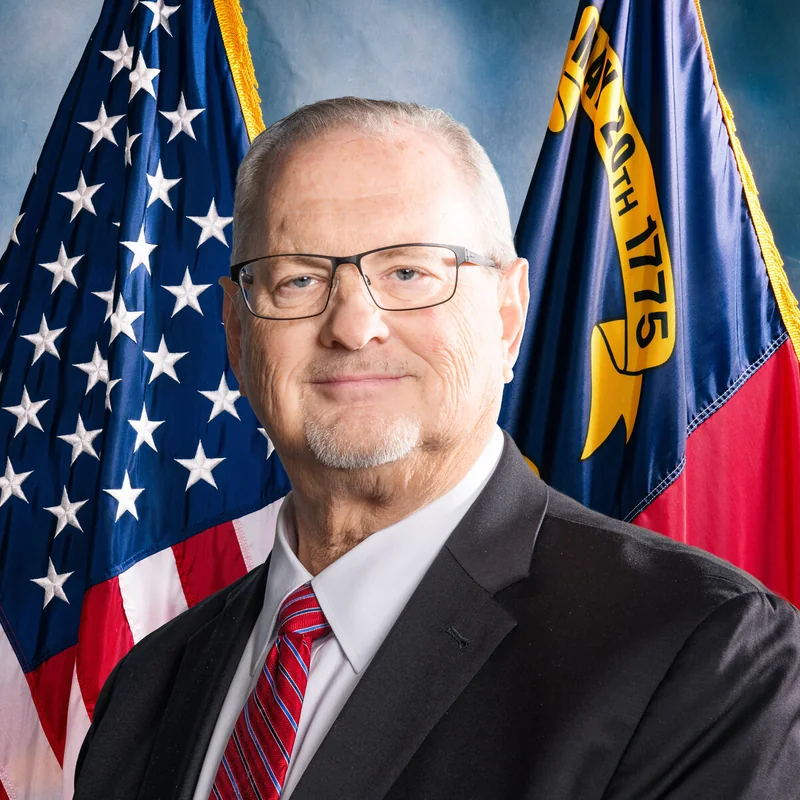

“Prison can be a new beginning. My journey shows that with support and opportunity, a second chance is possible for anyone willing to work for it.”
Darnell Cherry
Incarcerated age 16–43 • BA Graduate • Youth Pastor
Testimonial: "I am one of the blessed few that was blessed after doing 26 1/2. I was incarcerated at the age of 16 till the age 43. While inside I educated my mind for the preparation of society. Since my release I have accomplished the completion of my BA degree, a youth pastor, and starting my career as a dietitian at the hospital. I have gained the love of my daughter and family. Today as a free man I can honestly say God is still in the blessing business."
Background: Grew up in Bertie County, frequently moving between North Carolina and Connecticut to live with various family members. Had a strong passion for school but became involved in street activities at the age of 14. Incarcerated in 1997 at the age of 16 and served 26.5 years in prison.
Impact: Judson College was a great support during reentry, helping to be successful in the last year and into graduation. Lived on the college campus with housing and food being provided.
Achievements:
-
Education: Graduated with a 3.7 GPA at Judson College.
-
Employment: Recently started a career in the ECU Dietitian Department, focusing on catering and serving. Has also held positions as a box truck driver, Perdue Farms employee, and Target Distribution Warehouse worker.
-
Community Activities: Serves as a youth pastor at the church, mentoring youth by sharing God’s word and uplifting children and youth.
Kenneth Bennett
35 Years in Accounting • Asst. Director of Fiscal Operations
Testimonial: "The atmosphere of Correction Enterprises from day one was a dream come true. I was given every opportunity to learn, catch up, and use my skills to help others. I have transitioned from offender to Assistant Director of Fiscal Operations, and to me, that’s not work—I get to help people every day."
Background: Kenneth Bennett had never been in jail or prison before 2018, when he began serving a 96-month sentence. With 35 years of experience in manufacturing accounting, he was hired as a warehouse worker at Columbus Correctional and later worked as an Executive Mansion Assistant on Work Release. He was released in December 2023.
Impact: After release, Kenneth was offered a temporary position at Correction Enterprises, where he quickly advanced to Director’s Executive Assistant and, by June 2025, to Assistant Director of Fiscal Operations. His accounting and management skills now help Correction Enterprises support over 1,300 offenders in 27 production facilities.
Achievements:
-
Career Progression: Advanced from Temporary Administrative Assistant to Executive Assistant, and now Assistant Director of Fiscal Operations at Correction Enterprises.
-
Leadership: Serves on the Executive Team, helping Correction Enterprises become a self-supporting, pro-offender division of the Department of Adult Correction.
-
Mentorship: Uses his experience to support and inspire others rejoining society and pursuing their own second chances.
Jorgie Brown
Released May 2025 • Criminal Justice Student • Advocate
Testimonial: "Prison can be a new beginning. My journey shows that with support and opportunity, a second chance is possible for anyone willing to work for it."
Background: Jorgie Brown served 70 months in prison and was released on May 4, 2025. While incarcerated, Jorgie worked with Correction Enterprises, first at the sewing plant and later in the administrative offices, building skills and trust.
Impact: Upon release, Jorgie was offered a full-time position with Correction Enterprises, reflecting the growth achieved during incarceration. Jorgie is also a participant in the Arise Collective transition program and is pursuing a degree in Criminal Justice at Campbell University.
Achievements:
-
Career: Secured full-time employment with Correction Enterprises immediately after release.
-
Education: Currently studying Criminal Justice at Campbell University.
-
Advocacy: Shares personal story to inspire others and advocate for second chances.
Objective 1
Increase the number of Local Reentry Councils (LRCs) supported through state funding to cover all 100 counties.
Strategies
DAC will identify internal reoccurring funding for LRCs.
DAC has added 11 LRCs, however funding is not reoccurring.
DAC will collaborate with other Departments and sources such as philanthropic foundations and local governments to provide funding for LRCs.
The Department of Commerce has funded 3 new LRCs.
DAC will advocate for additional funding for LRCs from the General Assembly by providing evidence-based data and information of the benefits of LRCs to the State of North Carolina.
DAC has advocated for LRCs in previous years and plans to continue to do so. In November, 2025, DAC, in collaboration with Council of States Governement, conducted a meeting with Philanthropic Foundations and shared the LRC model and needs for funding.
DAC will collaborate with the Office of Strategic Partnerships to partner with researchers to conduct a study on the effectiveness of LRCs.
Recently contracted with vendor to track services provided by LRCs.
DAC will review and revise the LRC model to ensure all relevant agencies/resources are represented and best practices are shared across the state.
DAC Transition Services is completing quality assurance with every LRC.
DAC and DPS will ensure collaborative support between local Juvenile Crime Prevention Councils, DAC, LRCs, employers, reentry nonprofits, and any other organization that would aid with youth reentry.
DAC and DPS are collaborating to connect the LRCs with the Juvenile Crime Prevention Councils.
Performance Metrics
Number of LRCs by Region of the State and Number of Counties Served.
Number of People Released Served by a Reentry Council Annually.
Number of Juvenile Crime Prevention Councils Connected to an LRC.
Number of Work Force Development Boards connected to an LRC.
Objective 2
Increasing the number of high school diplomas, high school equivalencies and industry-valued continuing education credentials earned by incarcerated people in adult and juvenile facilities by 75%.
Strategies
DNCR will develop partnerships with DAC and DPS to engage currently incarcerated and/or previously incarcerated people in the existing Excel High School accredited high school diploma program.
This discussion has occurred for DAC. At this time, we are not able to develop a partnership with Excel High School. NCDJJDP Education Services has not yet discussed the addition of Excel High School to its offerings.
DAC and DPS will enhance existing partnerships and develop new partnerships with community colleges to grow offerings of non-credit credentials training programs. When possible, co-enrollment in Workforce Innovation and Opportunity Act (WIOA) Title II services and industry-valued non-degree credentials training programs is encouraged.
DAC is working to grow offerings throughout the state; however, we are being intentional about it with specific criteria. Concerns continue to exist about the capacity for some community colleges to provide instructors for programming. NCDJJDP Education Services has partnered with another community college, Richmond Community College. We look forward to starting enrollments in the Spring of 2026.
DAC and DPS will partner with the NC Workforce Credential Advisory Council and myFutureNC to cross-reference which credentials on the NC Workforce Credentials list of training programs are currently being offered in adult and juvenile correctional facilities. Support opportunities to align available programs with the identified credentials on the list.
Partnerships continue to strengthen between DAC, the Workforce Credential Advisory Council, and myFutureNC. We are working with them and the NC Community College Systems office to cross-reference which credentials on the NC Workforce Credentials list of training programs and to expand these offerings in our institutions. NCDJJDP is continuing discussions with the NC Department of Commerce. This work is still in the early phases.
DAC will minimize the movement of incarcerated people who are currently enrolled in an education program, including registered apprenticeships, and are not requesting a transfer, until they have completed their program unless they can immediately enroll in the same program in the correctional facility to which they will be transferred.
The Programs, Transportation, and Logistics (PTL) project has been launched and is assisting with this strategy. Education Services is also working with OPUS leaders to place critical notifications to transfer coordinators about identified programs.
DAC will require prison education providers to develop and implement plans for how incarcerated people can finish uncompleted coursework upon release. Prioritize offering educational programs in which participants will have unconditional admission to educational programs following release from prison.
This is in discussion with colleges and the NC Prison Education Consortium. Much work needs to be done; however, the discussions are in progress.
DAC will create a publicly available, searchable database of all coursework and registered apprenticeships available to incarcerated people offered by both community colleges and four-year colleges and universities in the state.
Catalog has been published. Updates are provided quarterly regarding coursework, apprenticeships, and all rehabilitative programs.
DAC will establish quality measures and evaluation for all prison education programs, including non-credit credentials training programs.
This process has begun with work on establishing "Best Interest Determination" criteria for Pell-approved Prison Education Programs. We have established criteria for which all education programs must meet or they must be discontinued by June 2026.
Performance Metrics
Number of High School Diplomas Earned. (DPS)
Percentage of High School Diplomas Earned of Total Attempted. (DPS)
Number of High School Equivalencies Earned.
Percentage of High School Equivalencies Earned of Total Attempted.
Number of Non-Credit Credentials Training Programs Completed.
Percentage of non-credit credentials training programs completed.
Number of Licenses or Credentials Earned.
Percentage of Licenses or Credentials Earned of Total Attempted.
Percentage of Alignment with the NC Workforce Credentials List of High-Quality Industry Recognized Credentials.
Average Time to Completion (Months) for High School Diplomas, High School Equivalencies, and Non-credit Credentials Training Programs by Type.
Percentage of students funded by NC Prison Education Program funds, % of students funded by Title II, and % funded by other sources.
Objective 3
Increase the number of post-secondary certificates, diplomas, and degrees offered in state correctional institutions by 25%.
Strategies
DAC will develop a plan in consultation with the Prison Education Consortium to effectively leverage state, federal, and private funding sources to provide efficient educational programs that, when possible, result in a diploma, degree, or credential.
Funding is evaluated annually and as needed to effectively leverage these funding sources. Programs are prioritized that result in diplomas, degrees, and/or credentials. The plan is developed with each institution through MOAs/MOUs. A singular plan has not been developed yet.
DAC, DOC, and the Prison Education Consortium (NCPEC) will develop educational pathways driven by local labor markets that will guide course offerings and transferable pathways to complete a diploma, degree, or credential.
This is in progress with Department of Commerce, DAC Innovation Section, and NCPEC.
DAC and DPS will enhance existing partnerships and develop new partnerships with community colleges, public and independent colleges and universities to grow education programs focusing on stackable credentials. When possible, co-enrollment in WIOA Title II services is encouraged.
DAC is working to grow offerings throughout the state; however, we are being intentional about it with specific criteria.
DAC will require education providers utilized by DAC to develop and implement plans for how incarcerated people who do not complete coursework while incarcerated can complete coursework upon release. Prioritize offering educational programs in which participants will have unconditional admission to educational programs following release from prison.
DAC will create a publicly available, searchable database of all coursework and registered apprenticeships available to incarcerated people offered by both community colleges and four-year colleges and universities in the state.
Catalog has been published. Updates are provided quarterly regarding coursework, apprenticeships, and all rehabilitative programs.
DAC will establish quality measures and evaluation for all prison education programs, including diplomas, certificates, associate degrees, and four-year degrees.
This is in progress but is an ongoing project. Work has begun on this strategy.
Performance Metrics
Number of Post-Secondary Certificate Programs, Number of Learners Enrolled in Certificate Programs, Number of Completions of Certificate Programs, and Average Time to Completion.
Number of Post-Secondary Diploma Programs, Number of Learners Enrolled in Diploma Programs, Number of Completions of Diploma Programs, and Average Time to Completion.
Number of Associate Degree Programs, Number of Learners Enrolled in Associate Degree Programs, Number of Completions of Associate Degree Programs, and Average Time to Completion.
Number of Bachelor’s Degree Programs, Number of Learners Enrolled in Bachelor’s Degree Programs, Number of Completions of Bachelor’s Degree Programs, and Average Time to Completion.
Number of Postsecondary Certificates, Diplomas, or Degrees Earned by Learners who Already Earned a Postsecondary, Certificate, Diploma, or Degree in a Related Field.
Number of Master’s Degrees or Higher (Master’s, Doctoral, and Professional Degrees) Programs, Number of Learners Enrolled in Graduate Level Programs, Number of Completions of Graduate Level Degree Programs, and Average Time to Completion.
Percentage of Students in Programs Funded by NC Prison Education Program Funds, % of Students Funded by Pell Grants and % Funded by Other Sources.
Objective 4
Increase the number of post-secondary certificates, diplomas, and degrees programs available to students at no cost by 25%.
Strategies
DAC will increase higher education programming for incarcerated people utilizing Pell Grants by partnering with colleges and universities that qualify to be a prison education partner and meet all federal guidelines.
Two colleges (four programs) were approved by NC Department of Education to be Prison Education Program partners and receive Pell grants.
DAC will develop a strategy to effectively utilize NC Prison Education Program (PEP) funds to provide greater access to no-cost degree programs.
The strategy is to use PEP (legislative) funding for all programs that are provided through community college partners as long as funding is available. Pell is only used when absolutely necessary and for bachelor's degree programs that are unable to be funded by PEP funding.
DAC will explore opportunities to partner with the NC State Education Assistance Authority (SEAA) to identify if currently incarcerated people are eligible for state funded scholarships including but not limited to NextNC and the North Carolina Need-Based Scholarship for Private College Students.
This discussion has been held and incarcerated students are considered in-state residents. They are therefore entitled to SEAA assistance if they qualify (according to SEAA handbook).
DAC will revise the existing Prison Education Consortium (NCPEC) to include representation from all prison higher education, registered apprenticeship, and workforce partners including the North Carolina Community College System Office, participating community colleges, the UNC System Office, participating UNC System institutions, a representative of North Carolina Independent Colleges and Universities, participating independent colleges and universities, DOC, current or formerly incarcerated students, and philanthropic organizations.
Focus on growth for NCPEC continues.
DAC will provide resources to community colleges, public universities, and private colleges and universities in North Carolina who are interested in offering degree programs in correctional facilities. Including but not limited to a mentoring program for those seeking approval to be a Pell Grant approved program.
NCPEC serves as a mentor for those seeking approval to be a Pell Grant approved program. Written resources are in production to provide to partners who are interested in offering Pell grant approved programs.
Performance Metrics
Number of Approved Pell Grant Programs by Academic Level.
Number of Postsecondary Partners with Approved Pell Grant Programs by Institution Type.
Number of Approved Post-secondary Degree Programs Funded Through Prison Education Program Funds.
Number of Correctional Facilities with an Associates or Bachelor’s Degree Program.
Average Cost Per Student by Program.
Objective 5
Increase the average wages earned by previously incarcerated people.
Strategies
DAC and DOC will implement career services in every DAC-designated reentry facility and increase the number of incarcerated people receiving virtual career services through NCWorks Online before release by continuing communication with Correction Enterprises, utilizing tablets. These career services will be able to assist people of all ages and at all stages of their careers.
NCJET has gone Live in 3 designated reentry facilities - Albemarle (190 participants/84 cmp resumes), Sampson (35 participants/22 cmp resumes) and Randolph (34 participants/17 cmp resumes)
DAC and OSHR will ensure that incarcerated people receive support to develop resumes accurately portraying all education and work experiences.
DAC and OSHR have met and OSHR is close to finalizing a ‘How to apply for state government jobs’ training that will be accessible to the public, including justice involved individuals.
DAC and DOC will improve the Travel/Tourism Call Center currently at the NC Correctional Institution for Women.
DMVA will collaborate with DAC to identify incarcerated veterans with NCWorks Online infrastructure and state and local partner agencies to connect justice-involved veterans to employment and educational opportunities.
Veterans Administration and NCDMVA are currently visiting our facilities to assist with benefits and employment.
DPS will engage with the North Carolina Department of Public Instruction and the State Board of Education to increase opportunities for students to enhance skill development, access to work-based learning opportunities for people of all ages, and complete secondary education.
DPS will engage with the North Carolina Department of Public Instruction, the State Board of Education, the North Carolina Community College System, the UNC System, and DOC to enhance postsecondary and workforce opportunities for students.
OSHR will collaborate with DAC to create a training for state agencies to reduce bias and discrimination towards justice-involved people in the workplace.
OSHR’s lead Equal Employment Opportunity consultant has been working on this training since the Executive Order was signed.
OSHR will support state agencies to increase opportunities to recruit and hire recently incarcerated people, including enhancing partnerships with community-based organizations and Temporary Solutions.
OSHR through Temporary Solutions are hiring recently incarcerated people in various positions.
Performance Metrics
Number of Correctional Facilities in which NCWorks Online is Available on the Tablets.
Number of Incarcerated People Receiving Career Services Through NCWorks Online by Race, Gender, Age, etc.
Average Wage of Reentrants by Year.
Number and Percentage of Previously Incarcerated People by Year Earning at or Above the Federal Poverty Line.
Objective 6
Increase the number of registered apprenticeships completed by incarcerated people by 50% by 2030
Strategies
DAC and DOC will engage and develop a mutually beneficial relationship with ApprenticeshipNC, local apprenticeship intermediaries and organizations like Guilford Apprenticeships Partners, community colleges, and employers throughout the state.
DAC collaborate with ApprenticeshipNC on increasing the number of registered apprenticeships.
OSHR will collaborate with government agencies to provide guidance and resources to agencies who have or plan to have a registered apprenticeship program, including recruitment outreach to justice system involved people.
OSHR is close to finalizing a guideline for agencies for developing registered apprenticeship programs.
DPS will establish or expand registered apprenticeship opportunities for youth in the juvenile justice system in partnership with DOC and other agencies.
DEQ will provide support to DAC to identify industry partners offering job training opportunities related to waste reduction. DEQ will serve an advisory role in the development of apprenticeship programs between DAC and the industry if such programs are pursued.
DAC will ensure that there are apprenticeships available for people of all ages, genders, skill levels, and physical capabilities.
DAC continue to increase current apprenticeships and implement new ones within our facilities for all incarcerated people.
Performance Metrics
Number of Registered Apprenticeship Opportunities for Incarcerated People.
Number of Registered Apprenticeship Enrollments.
Number of Registered Apprenticeships Completed.
Number of Active Apprentices.
Objective 7
Expand the number of incarcerated people participating in work release by 50% by 2030.
Strategies
DAC and DOC will collaborate to increase awareness and acceptance of work release by private sector businesses.
DAC Work Release Team are working to increase private sector employers.
DAC and DOT will expand work release and employment opportunities for incarcerated and formerly incarcerated people, including expanding existing relationships with nonprofit organizations that employ formerly incarcerated people and expanding specialized on-the-job training opportunities for justice-involved youth and adult populations.
Work Release has increased by 20%. per the DAC Work Release Team.
DAC will increase the number of Prison Industry Enhancement Certification Programs by 50%.
DAC is working to increase the number of PIE programs.
DNCR will partner with DAC to provide work release, including seasonal opportunities, for incarcerated and formerly incarcerated people.
DEQ will partner with DAC to provide work release and registered apprenticeship opportunities to incarcerated and formerly incarcerated people.
DAC will ensure there are work release opportunities for people of all ages, genders, skill levels, and physical capabilities.
Currently in progress with the current 20% increase.
DOC will develop a statewide employer outreach and retention program, in concert with DAC.
DAC will complete a comprehensive review of current DAC Work Release Policy and Procedure and facility Standard Operating Procedures to compile and distribute best practices and enhance efficiency.
Currently in progress of being reviewed/updated.
Performance Metrics
Number of Incarcerated People Participating in Work Release and Employment Opportunities.
Number of Incarcerated People Participating in Work Release by Industry and Position.
The Number and Percentage of Incarcerated People Participating in Work Release Earning at or Above the State Minimum Wage.
The Median Hourly Wage of Incarcerated People Participating in Work Release.
Percentage of Incarcerated People Eligible for Work Release who are Currently Assigned to Work Release.
Objective 8
Increase the number of second-chance employer partners by 30% by 2030.
Strategies
DOC will educate employers on the Work Opportunity Tax Credit and Federal bonding while establishing strong relationships with all economic development projects.
DOC is currently educating employers on WOTC and Federal Bonding. Early stages of planning a Work Lunch and Learn in 2026 with DAC.
DAC, DOC, and Correction Enterprises will provide employers with education around second chance hiring, including opportunities such as federal bonding and Workforce Innovation and Opportunity Act (WIOA) tax credits.
Currently, providing and educating about second chance hiring with employers.
DAC and DOC will connect second chance employer partners with LRCs and other reentry nonprofits.
DAC and DOC are currently connecting, engaging LRCs and second chance employers. Workforce Development Boards are involved with this connection as well.
Performance Metrics
Number of Second-Chance Employers in NCWorks Online and the Number of Justice System Involved People Employed by Them.
Number of Employers that Receive the Work Opportunity Tax Credit.
Objective 9
Ensure that 100% of reentrants are able to leave with a state identification card and access to resources for obtaining additional forms of identification.
Strategies
DAC and DOT will maintain the availability of state identification cards for people preparing for release and expand the eligibility of incarcerated people able to receive an identification card.
NCDAC and NCDMV continue to partner to provide state IDs to eligible individuals prior to release. Efforts are underway to identify specific eligibility capable of expansion.
DAC and DOT will develop standardized modern resources for obtaining various forms of state identification, capable of placement on offender tablets and into Transition Document Envelope.
Documents have been created and finalized to share locations of NCDMV offices statewide and instructions for application to multiple forms of state IDs. These are currently in the process of placement onto tablets statewide.
DAC and DOT will provide driver’s licenses to incarcerated people prior to release, where possible.
Not started. DMV and DAC subcommittee members to collaborate on this during FY26.
DAC and DOT will provide educational resources to inform incarcerated people on and prepare them for the process to obtain a driver's license upon release.
NCDAC provides information to individuals releasing as to locating a local DMV. Driver's License manual and CDL manual has been placed on the offender's tablets. Additional resources under development for placement in offender Transition Document Envelopes.
DAC will incorporate the use of standardized educational resources into applicable Case Management Policy and Procedure.
Specific policy verbiage has been provided to policy management office to include use of these resources in Transitional Document Envelopes (Case Management Policy).
DAC will verify Social Security numbers for all incarcerated people two years prior to release.
NCDAC continues to make concerted efforts to verify Social Security numbers for all incarcerated individuals. Significant regulatory obstacles impede completion of this strategy at present.
Performance Metrics
Percentage of Annual Releases from Incarceration that Received a State Identification Card through the DAC/DMV Partnership Program.
Percentage of Annual Releases from Incarceration that Declined a State Identification Card Through the DAC / DMV Partnership Program.
Percentage of Annual Releases from Incarceration that have a Verified Social Security Number.
Objective 10
Ensure that opportunities for digital education and communication, as well as digital literacy training, are made available to 100% of incarcerated people.
Strategies
DIT will implement secure internet-based education and reentry tools for people in adult and juvenile correctional facilities.
An array of internet-based education and reentry tools are provided to individuals in NCDAC custody, including job search tools and digital literacy training. NCJET is being introduced to the offender population via tablets, for visibility of current job listings.
DAC and DPS will develop and make available to all incarcerated people a Reentry Pathway within Hope University and Orijin’s Managed Learning Platform for Reentry, respectively.
NCDAC has activated a Reentry Pathway in one of its two learning management systems within HOPE University. An additional Reentry Pathway in the second learning management system is pending activation at present.
DAC and DIT will develop a centralized reentry resource platform to link resources across various topics, such as health, housing, and employment.
DAC and DIT will develop training for reentrants prior to release on use of the centralized reentry resource platform.
DIT will develop a modern digital literacy training program, to include use of email, individual digital devices, and programmatic/educational resources specific to incarcerated people, inclusive of multiple skill levels. This will include digital literacy assessment tools for participant outcomes.
An array of digital literacy training resources have been developed and are available to incarcerated individuals via iNet. These resources and related assessment tools are anticipated to expand.
DIT will implement a secure email system for incarcerated people.
Performance Metrics
Number of Individual Hours Spent in Reentry Pathway within Hope University.
Number of Available Units of Content within the Reentry Pathway within Hope University.
Percentage of Annual Releases that have Completed the Digital Literacy Training Program.
Percentage of Incarcerated Population Identified as Active Secure Email Account Users.
Objective 11
Ensure 100% of incarcerated people with current civil tax liability related to drug charges are provided education and resources to assist in managing their outstanding debt.
Strategies
DAC will develop an education guide and resource documents in collaboration with DOR and NC Legal Aid to provide to appropriate incarcerated people who have a civil tax debt related to previous drug charges, in print and digital.
NCDOR is finalizing educational materials regarding civil tax liability tailored to incarcerated individuals. This information is planned for dissemination to the incarcerated population in multiple media, including digital content.
DAC and DOR will develop ongoing informational sessions for incarcerated people with current tax liability related to drug charges.
DOR will provide a resource document in collaboration with DAC for incarcerated people upon reentry including contact information for resources to help manage any outstanding state tax debt, to be updated annually.
Performance Metrics
Percentage of Incarcerated People with Current Civil Tax Liability Related to Drug Charges Having Received Education Guide and Resources, Whether Digitally or in Print.
Number of Incarcerated People who have Attended an Informational Session on Civil Tax Liability Related to Drug Charges.
Objective 12
Enhance opportunities for people sentenced under the Fair Sentencing Act to earn parole by reducing by 50% Mutual Agreement Parole Program (MAPP)-eligible people who, through no fault of their own, are unable to complete programmatic assignments
Strategies
DAC will ensure that qualified persons can productively and successfully participate in MAPP both before and after release from incarceration.
Revised training for DAC Institutions staff on MAPP is underway. Quarterly meetings between the Commission and Rehabilitation Services staff have begun. Commission staff are holding in-Institution informational/status update sessions with MAPP offenders during assignment. A new Smartsheet tracking system has been developed and shared between Rehabilitation Services and the Commission. As of December, 2025, a comprehensive review of all individuals identified as eligible to be considered for a MAPP has been completed. In this review of approximately 1,000 offenders, histories of program participation, off-site job assignments, disciplinary infractions, and other related factors for MAPP consideration were examined. This resulted in a current listing of individuals for whom referrals to MAPP may be made.
DAC will develop and implement for all DAC staff a training on the eligibility for MAPP assignment, as well as referral and program components and processes.
An enhanced MAPP procedural training is under development and is anticipated to rollout in the coming months.
Performance Metrics
Percentage of Eligible Incarcerated People Currently Under a MAPP agreement.
Percentage of MAPP Participants Successfully Completing the Agreement.
Percentage of Currently Incarcerated MAPP Participations who, Through no Fault of Their Own, are Unable to Complete Programmatic Assignments.
Objective 13
By 2030, provide 100% of self-identified incarcerated veterans within state facilities with services to gain employment upon release.
Strategies
DAC and DMVA will create a statewide program to connect incarcerated military veterans to reentry support services for employment before and upon release.
A project is underway between DMVA, GDAC, and DAC to allow DAC to verify veteran status of any/all individuals in custody. A review of NCWorks and NCJET systems is underway to maximize utility specifically for the veteran population.
DAC and DMVA will create a veteran specific reentry peer support program.
Performance Metrics
Number of Veterans Released from Incarceration Annually, and the Number of Those who are Connected to a Program to Help Them Gain Employment.
Percent of Previously Incarcerated Veterans who are Employed.
Objective 14
100% of Medicaid eligible people will have access to Medicaid upon reentry from prison and jail.
Strategies
DHHS will work with the Centers for Medicare & Medicaid Services with the goal of securing approval for the NC Section 1115 Demonstration Waiver to allow certain people to receive certain Medicaid services prior to release.
The 1115 Waiver was approved by CMS in December 2024.
Pending Centers for Medicare and Medicaid Services (CMS) approval of the 1115 waiver renewal request, DHHS will work to expand the Healthy Opportunities Pilots statewide during the new waiver period. This will allow the state to further test and evaluate the impact of providing select evidence-based, non-medical interventions related to housing instability, transportation insecurity, food insecurity, and interpersonal safety.
The 1115 Waiver was approved by CMS in December 2024.
DAC and DHHS will establish processes and supports to allow all Medicaid eligible people to apply for Medicaid within thirty days of incarceration.
DAC has a process in place to assist some offenders in applying for Medicaid within 90 days of their projected release date.
DAC and DHHS will develop automation to track Medicaid applications within DAC, DPS, and county jails.
DAC has developed data dashboard to track individuals who have applied for and received Medicaid prior to their projected release date. DHHS has been working with the county jails as part of the 1115 Waiver planning. DAC Social workers have received training and are accessing NC Tracks.
DIT will ensure Medicaid applications can be completed online and that applicants are kept informed of their status updates.
ePass, the system where individuals can apply on-line for Medicaid, is currently unavailable in carceral settings secondary to requiring email and internet access.
Performance Metrics
Number of Medicaid Applications Submitted.
Percent of Incarcerated People who Apply for Medicaid Prior to Release.
Number of Incarcerated People Approved for Medicaid Prior to Release.
Number of Previously Incarcerated People Approved for Medicaid within the first 30 Days After Release.
Objective 15
Ensure 100% of released people who are diagnosed with Serious Mental Illness, Substance Use Disorders, and Significant Cognitive Impairments, including Intellectual or Developmental Disabilities (I/DD) or Traumatic Brain Injuries (TBI) are able to engage in the appropriate health and behavioral health services upon release.
Strategies
DAC and DHHS will collaborate with LME/MCOs and community agencies to provide pre- and post-release behavioral health care coordination for people with medication management requirements or other high need clinical and social factors.
DAC and the LME/MCO's are currently coordinating care for the population identified.
DHHS will collaborate with managed care plans to ensure Medicaid beneficiaries are enrolled in an appropriate health plan to have access to behavioral health, I/DD and TBI benefits upon release.
As of January 1, 2025, all individuals releasing from prisons with Medicaid are automatically enrolled in Medicaid Direct, providing enhanced access to services for SMI, I/DD, and TBI.
DHHS will continue provider capacity building efforts to ensure that communities have adequate well-trained mental health and substance use services to meet the needs of formerly incarcerated individuals.
Peer support services have been expanded for individuals releasing with SMI and a history of serious crimes. Building provider capacity in Western NC has had some setbacks secondary to hurricane Helene. DHHS launched the FACT teams in November 2025.
DHHS will collaborate with LME/MCOs and providers to ensure formerly incarcerated individuals without Medicaid receive care coordination and mental health and substance use services.
This strategy is in progress.
Performance Metrics
Number of People with a Behavioral Health Care Plan in Place at Time of Release.
Number of People Engaged with Care Team 30/60/90/120 Days Post Release.
Objective 16
100% of eligible people will have access to SNAP benefits upon reentry.
Strategies
DHHS will apply for a United States Department of Agriculture waiver to allow people who are incarcerated with an impeding release date to apply for Food and Nutrition Services EBT while incarcerated.
DAC and DHHS will create mechanisms to allow people with pending release dates to pre-screen and apply for Food and Nutrition Services.
DHHS will collaborate with DAC to create and distribute informational material to LRCs and Community Supervision offices on Work First. The resources should include information on eligibility and how a reentrant can apply.
DAC is meeting with community partners.
Performance Metrics
Percentage of Eligible People who Receive SNAP and Electronic Benefits Transfer (EBT) Benefits Upon Release.
Objective 17
100% of youth in a Youth Development Center will receive a standardized comprehensive clinical assessment prior to admission or within 60 days of admission and receive a reassessment 75 days prior to release to ensure each youth has the ability to succeed post release.
Strategies
DPS will ensure that every youth’s needs are assessed using evidence-based screening tools appropriate to setting and level of involvement with the juvenile justice system to ensure personalized care at the earliest opportunity.
DPS is currently using evidenced-based screening tools such as the Youth Assessment Screening Inventory (YASI).
DPS will partner with DHHS to ensure youth involved in the juvenile justice system and their families receive standard care coordination by the Juvenile Justice Behavioral Health (JJBH) teams pre and post release.
DPS facilitates post-release planning meetings.
DHHS will partner with LME/MCOs to ensure that all regions of the state have a consistent network of evidenced-based community services supported by the JJBH teams to meet the mental health and substance use needs of youth in the juvenile justice system and their families.
DHHS is partnering with Empower Community Care and working with LME/MCO's to ensure connections.
DPS and DHHS will ensure the Youth and Family Voice Training is embedded into decision making through training and engagement with System of Care principles, a comprehensive network of community-based services and supports organized to meet the needs of families.
Training has been developed.
Performance Metrics
Number and Percentage of Completed Comprehensive Clinical Assessments that Result in a Successful Referral to an Evidence-Based Service.
Number of Professionals that are Trained in Youth and Family Voice Training who are Engaged with Justice System Involved Youth.
Objective 18
By 2030, provide 100% of self-identified incarcerated veterans within state facilities with services to gain healthcare upon release.
Strategies
DAC and DMVA will create a statewide program to connect incarcerated military veterans to reentry support services for healthcare before and upon release.
A project is underway between, DMVA, DAC, and GDAC to verify veteran status for incarcerated individuals.
DAC and DMVA will create a veteran specific reentry peer support program.
Performance Metrics
The Number of Veterans Released from Incarceration Annually, and the Number of Those who are Connected to a Program to Help Them Gain Healthcare.
The Number of Previously Incarcerated Veterans who have Healthcare.
Objective 19
Implement an online housing resource guide with housing resources available for every county in the state by 2030.
Strategies
DAC will collaborate with CSG Justice Center, the Interagency Council for Coordinating Homelessness Programs (ICCHP), and other agencies with housing programs to assess the statewide housing landscape by: a.) Researching each county’s existing housing resources b.) Assessing current cross-system partnerships and the current needs and gaps c.) Researching and identifying state and local city/county housing plans for affordable housing, including veteran-specific housing that could serve formerly incarcerated veterans.
Assessment completed. Results Presentation at July 2025 Reentry 2030 Meeting.
• Completed and compiling
• Completed and compiling
• In progress.
DAC will collaborate with the ICCHP to advocate for additional housing resources for previously incarcerated people. This will include: a.) Developing a talking points template for outreach to housing partners on providing resources to previously incarcerated people b.) Identifying existing housing advocates and housing organizations c.) Requesting DAC representation on existing housing task forces and workgroups throughout the state
Andrea Allard on ICCHP. Discuss template.
• Completing talking point presentation for housing partners.
• In progress
• Deputy Secretary Pettigrew placed on ICCHP Board as DAC representative.
DAC will collaborate with the ICCHP and other agencies with housing programs to explore the implementation and maintenance of an accessible and user-friendly online housing database or the addition of resources specific to previously incarcerated people to an existing database. This database will specify resources tailored to the elderly, disabled, or families. Explore options for partnerships across agencies and opportunities to build on existing work.
DAC staff completed internal survey within Community Supervision. Now being compiled into spreadsheet and accessible to both Institutions and Community Supervision staff.
Performance Metrics
Number of Housing Resources Identified, Disaggregated by Type, Including Veteran-Specific Housing Supports that Could Serve Formerly Incarcerated Veterans.
Number of Counties Represented in Guide.
Number of Interactions and Uses of the Resource Guide to Help Reentrants.
Reentrant Satisfaction with the Helpfulness of the Resource, as Identified by a Survey.
Objective 20
Reduce the number of formerly incarcerated people experiencing homelessness by 10% every year.
Strategies
DAC will collaborate with the ICCHP to track the number of reentrants in the Homeless Management Information System six and twelve months following release.
Deputy Secretary George Pettigrew will work with ICCHP as a representative.
DAC will create 5 housing specialists to ensure every person in need of housing assistance prior to release has support in finding safe and stable housing in the community.
DAC is in the process of establishing one position to facilitate state level strategic housing initiatives.
DMVA will create 3 transition service coordinators who will assist with housing previously incarcerated veterans.
DAC will establish consistent housing/homelessness risk assessment for use by housing specialists.
Reviewing assessments from NCHFA and other states. CSG is assisting this effort.
DAC will encourage use of the housing first model by: · Training PPOs, case managers, housing specialists, and LRC staff on the Housing First model, · In collaboration with justice system involved people, integrating the Housing First Model into DAC policies concerning housing, and · Partnering with the ICCHP to engage community partners through provider education and training.
Determined by committee to be modified version of Housing First due to DAC requirements. Currently developing presentation for training purposes.
DAC will collaborate with the NC Housing Finance Agency (NCHFA), PHAs, and private landlords/housing providers to educate landlords on the reentry population and dispel myths that they make bad tenants.
Met with Scott Farmer, head of NC Housing Finance Agency. Working on presentation material.
DAC will collaborate with the NCHFA and private landlords/housing providers to increase housing opportunities for justice-involved people.
DAC and DMVA will develop a partnership with Federal/State/City/County governments to facilitate pathways to permanent housing and services for justice system involved people.
DMVA will provide family benefits education to incarcerated veterans’ families.
DAC will advocate to COCs, the NCHFA, and other housing agencies for the prioritization of those who are justice system involved.
Committee currently working on developing presentations.
DAC will review the DHHS Strategic Housing Plan and partner with its leaders to identify areas of overlap to reduce duplication of effort, align work, and partner to ensure inclusion of the needs of justice system involved people within the DHHS’s plan’s target population.
Recently added DHHS representative to committee.
DMVA will bolster the relationships with housing providers utilizing HUD-VASH and GPD funding.
DAC will collaborate with DHHS and housing providers to ensure that disabled or elderly reentrants have housing opportunities that fit their needs.
Performance Metrics
Number of Reentrants that are Releasing Without Housing.
Number of Housing Specialists Employed by DAC and Supported by DMVA.
Number of Incarcerated People Served by Housing Specialists, Including the Number of Incarcerated Veterans Supported by DMVA.
Number of Housing Assessments Completed by DAC Housing Specialists and DMVA.
Number of PPOs, Case Manager, Housing Specialists, and LRC Staff Trained on the Housing First Model.
Number of Reentrants Receiving Rental Assistance.
Number of Reentrants Receiving Rental Assistance who have Moved into a Unit.
Number of People Served by Partner Agency Staff for Housing Assistance and Their Housing Status.
The Number of Additional Units Available Through Private Landlords Every Year.
Objective 21
Increase the number of units for people exiting without a housing plan by 1,800 units available each year by 2030 by creating a continuum of housing options, including transitional housing and permanent housing for reentrants.
Strategies
DAC will identify and support 10 new transitional housing programs by 2030.
DAC will work with existing providers to expand programs through DAC grants and other funding.
DAC will engage in broad-based work with affordable housing providers, including PHAs and private owners, to increase overall availability of units and vouchers and increase access to units and vouchers for the justice system involved population.
JRC Housing Subcommittee met with NCHFA to learn more about vouchers and is currently considering next steps.
DAC will establish partnerships with each county’s COC to facilitate housing assistance and services for justice system involved people.
DAC will develop a process to quickly identify, assess, refer, and connect people in crisis to housing and assistance through LRCs.
Performance Metrics
Number of Transitional Housing Units Available and the Number of People Placed in Transitional Housing, Including Veteran Specific Units.
Number of Supportive Housing Units Available Specifically for Justice System Involved People.
Percentage of People Within 90 Days of Release that are Connected to Housing Services, Including how Many of Those People are Veterans.
Amount of Funding Dedicated to Reentry Transitional Housing.
Objective 22
By 2030, provide 100% of self-identified incarcerated veterans within state facilities with services to gain housing upon release.
Strategies
DAC will partner with housing providers across the state to align programs in providing increased services.
DAC and DMVA will create a statewide program to connect incarcerated military veterans to reentry support services for housing before and upon release.
DAC and DMVA will create a veteran specific reentry peer support program.
Performance Metrics
Number of Veterans Released from Incarceration Annually, and the Number of Those who are Connected to a Program to Help them Gain Housing.
Number of Previously Incarcerated Veterans who are Homeless and are on Post-Release Supervision.
Objective 23
Reduce by 50% the number of non-custodial parents who are delinquent on child support and are within 2 years of release from incarceration.
Strategies
DAC and DHHS will develop a mechanism through data sharing to ensure people are aware of their child support obligations upon reentry.
DAC and DHHS will develop new resources to help people successfully begin repayment and utilize all tools available.
DAC and DHHS will collaborate with Local Jails including the Sheriff’s Association to better share data of peoples’ confinement periods.
DAC and DHHS will expand training and education on child support obligations/process for the incarcerated and reentrants.
Performance Metrics
Number of People Within 2 Years of Release from Incarceration who Owe Child Support, and the Number of Those who are Delinquent on Payments.
Number of Incarcerated People with Child Support Obligations Including Specific Demographics, i.e. Gender/Race.
Objective 24
Increase the number of successful completions of Post-Release /Parole and Juvenile Post Release Supervision (PRS) by 25% by 2030.
Strategies
The Post-Release Supervision and Parole Commission will review all Commission policies and procedures to ensure they effectively support successful reentry.
Commission has hired a Reentry Case Analyst.
DAC will enhance the collaboration with LRCs to reduce the number of technical violations of supervision. DPS shall enhance collaboration with Juvenile Crime Prevention Councils to consider expansion of appropriate Post Release Supervision (PRS) services to reduce the number of Juvenile revocations.
DAC will enhance the collaboration with Recidivism Reduction Services to reduce the number of technical violations of supervision.
The Post-Release Supervision and Parole Commission (PRS will collaborate with Community Supervision to ensure consistent responses to violations to enhance reintegration.
The Commission and Community Supervision Leadership are having regular recurring meetings.
The Post-Release Supervision & Parole Commission will publish a publicly available policy manual.
Policy manual has been published and is available on website.
The Post-Release Supervision & Parole Commission will publish a publicly available report on parole actions the Commission has taken including the offenses charged, the amount of time served, the sex of the parole candidate, the race of the candidate, and the reasons given for all denials.
Demographic information has been added to annual report to legislature.
Performance Metrics
Number of Successful Completions of Post-Release/Parole and Juvenile Post Release Supervision (PRS).
Number of Technical Violations and Responses to Violations by Post-Release/Parole Commission.
Objective 25
Reduce the number of formerly incarcerated or Youth Development Center committed juveniles who report transportation as a barrier by 50%.
Strategies
DAC and DPS will survey formerly incarcerated people to identify what resources are currently unavailable to them because of lack of transportation options.
DAC will develop transportation resources to address identified gaps for formerly incarcerated people statewide.
DAC and DPS will ensure all reentrants, as well as parents/guardians of juveniles, are aware of transportation resources available or other resources that limit the need of transportation, such as telemedicine.
DAC and DPS will increase transportation support for reentrants through direct funding of transportation resource information, vouchers, and other strategies in coordination with LRCs.
Commerce has provided funding for transportation through the LRCs. This funding is through 2026 and is provided to the original 17 LRCs.
DAC, DPS, and DOT will ensure transportation resources are easily accessible from reentry housing and job sites.
Performance Metrics
Number of Formerly Incarcerated who Report Transportation as a Barrier.
Number of Transportation Resources Available Statewide.
Number of Gaps in Transportation Resources Statewide.
Objective 26
Provide access to reentry support for 100% of reentrants from a state prison and juveniles from Youth Development Centers by 2030.
Strategies
DAC will create an advisory board of previously and currently incarcerated people to advise the Department on terminology, rehabilitative programming, and reentry initiatives.
DPS will continue efforts to amplify youth voices and family engagement in the reentry process in collaboration with the Center for Juvenile Justice Reform at Georgetown University.
DAC will increase access to Reentry Peer Support for reentrants.
DAC will increase the Peer Support program within the facilities.
DAC is working with education partners to revitalize the Peer Support program in facilities.
DAC will increase the availability and access to re-entry support services.
DAC will create a statewide reentry resource repository network, comprising all relevant resources and platforms. This network will review resources and resource platforms on a periodic basis to ensure a comprehensive list of available and known reentry resources to be maintained by DAC and ensure that the resources are operating in good faith and providing effective resources to people reentering the community.
DAC will increase the number of reentry facilities so that every reentrant can go through one, no matter their custody level.
DAC has increased the number of designated reentry facilities to 24 including all classifications (Minimum, Medium, & Close).
DAC will provide methods to resolve outstanding warrants, tickets, investigations, obstacles to driver’s license restoration, and other unresolved legal issues prior to release from prison.
DAC has partnered with Blanchard Law Clinic and Duke Law School to conduct Driver's License Restoration Clinics for incarcerated at three correctional facilities.
All agencies will monitor performance metrics and adjust strategies to ensure all people have equal access to support and services.
Performance Metrics
Number of Incarcerated People who Access Peer Support Through LRCs.
Types and Numbers of Services Provided Through Peer Support.
Number of Incarcerated People who Complete a Certified Peer Support Program.
Number of Juvenile Referrals and Admissions to Reentry Support Services During Post Release Supervision (PRS).
Goal 1 Scorecard
Improve economic mobility of formerly incarcerated people by increasing the number of local reentry councils and providing access to educational, technical training, registered apprenticeship, work-based learning, and employment opportunities pre- and post-release.
Goal 2 Scorecard
Improve mental and physical health by expanding access to behavioral health and substance use disorder services pre- and post-release and ensuring that all eligible incarcerated people obtain Medicaid upon release.
Goal 3 Scorecard
Expand housing opportunities for formerly incarcerated individuals.
Goal 4 Scorecard
Remove barriers to successful community reintegration, especially for those returning to historically underserved communities.